

How long does knee replacement surgery take? For most patients, the answer is straightforward: the operation itself takes about 1 to 2 hours, whether it’s a conventional or MAKO robotic procedure. Door to door, from the moment you enter the operating suite to the moment you leave it, the process usually runs closer to 2 to 3 hours once anaesthesia, positioning and initial recovery are included. This guide breaks surgery time down by procedure type, walks through what happens hour by hour on the day, and covers how long you’ll stay in hospital and in Bangkok overall if you’re exploring knee replacement in Thailand.
Knee Replacement Surgery Time at a Glance
Knee replacement surgery time depends mainly on the type of procedure and whether both knees are being done in one session. Here is how the main options compare:
| Procedure type | Typical operating time |
|---|---|
| Partial knee replacement | 45 minutes to 1 hour |
| Total knee replacement (conventional) | 1 to 2 hours |
| MAKO robotic knee replacement | 1 to 2 hours |
| Bilateral knee replacement (both knees, same session) | 3 to 4 hours combined |
| Revision knee replacement | Up to 3 hours |
These figures cover active operating time only. Add roughly 45 minutes to an hour either side for anaesthesia, theatre preparation and initial recovery-room monitoring, and a single knee replacement typically occupies 2 to 3 hours of total theatre time. If you’re having both knees replaced in the same session, known as bilateral knee replacement, expect roughly double the time in theatre and a longer hospital stay to match.
| According to University of Utah Health orthopaedic surgeons, a typical total knee replacement takes about 80 minutes of active surgical time, most of the extra time on surgery day goes to anaesthesia and recovery-room monitoring, not the operation itself. |
Your Knee Replacement Surgery Day Hour by Hour
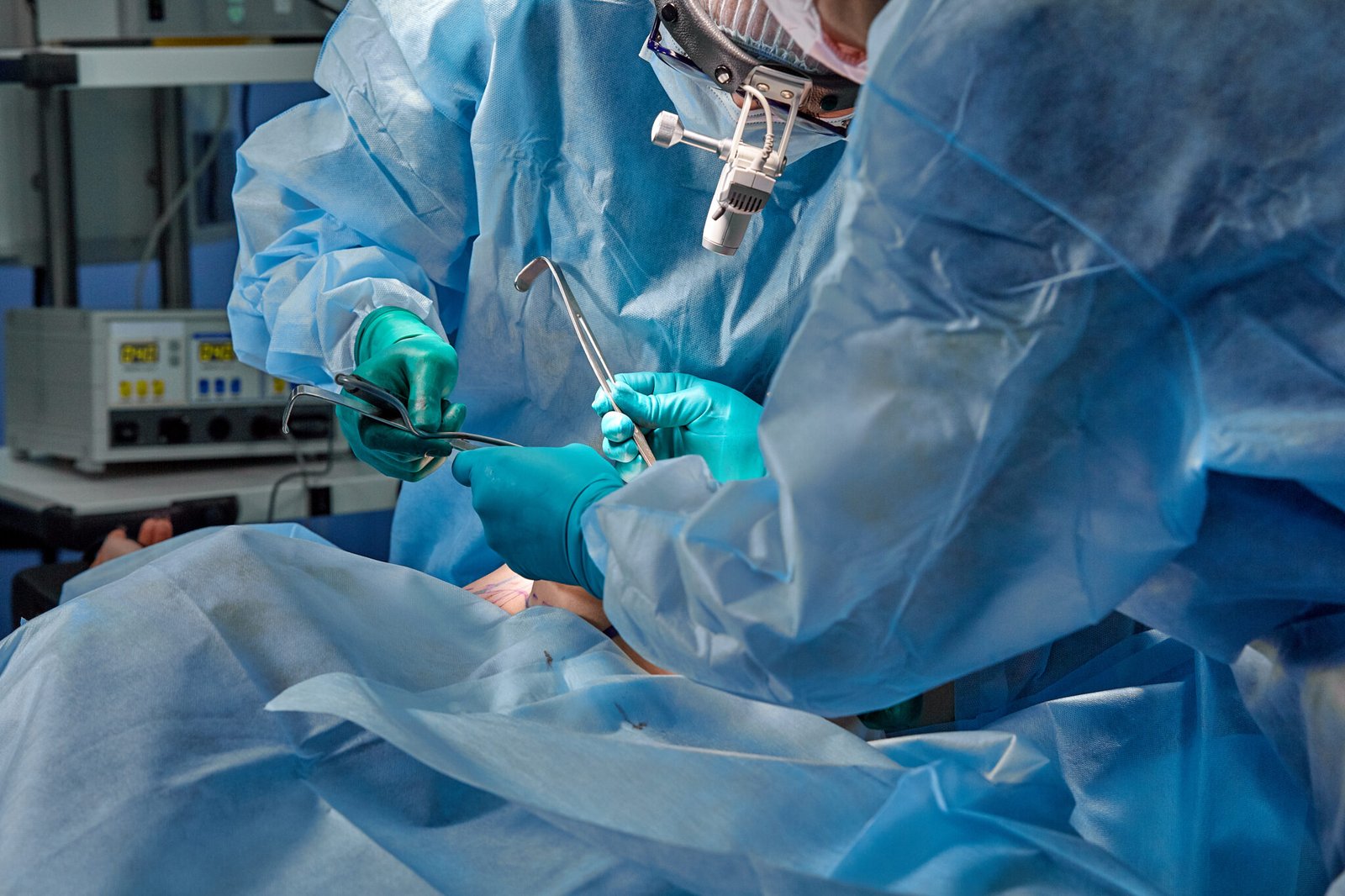
Knee replacement follows a consistent sequence regardless of hospital or surgeon. Here is where the time actually goes, from arrival to the ward:
- Arrival and final checks (2 to 3 hours before surgery): bloodwork, marking the correct leg, and a final review with your anaesthetist.
- Anaesthesia and positioning (15 to 20 minutes): general or spinal anaesthesia, then positioning on the operating table with the leg secured for access.
- The operation (1 to 2 hours): damaged cartilage and bone are removed, the joint surfaces are shaped, the implant is fitted, and movement and alignment are tested before closing.
- Recovery room (1 to 2 hours): you’re monitored closely as the anaesthesia wears off.
- Transfer to the ward: physiotherapy-led mobilisation typically begins within 24 hours of surgery.
Does Robotic Surgery Take Longer?
A common assumption is that robotic-assisted surgery adds time in theatre. In practice, MAKO robotic knee replacement typically takes about the same 1 to 2 hours as conventional surgery. The difference happens before surgery day: a CT scan is taken in advance and used to build a 3D plan of your knee, which the surgeon uses to plan bone cuts and implant position ahead of time.
During the operation, the robotic arm follows that pre-set plan within haptic boundaries, guiding the surgeon’s cuts rather than replacing their judgement. This planning stage is what allows for the precision robotic surgery is known for, without meaningfully extending time on the table.
How long do other types of knee surgery take?
Knee replacement is not the only knee operation, and the others are usually shorter. Operating times below are typical ranges from surgeon-reviewed sources; your own surgeon can give a firmer estimate once they have seen your scans.
| Procedure | Typical operating time | Source |
|---|---|---|
| Knee arthroscopy (keyhole) | 30 to 45 minutes; up to 2 hours if more is found | Practice Plus Group; Spire Healthcare |
| Meniscus repair | About 1 hour | AAOS OrthoInfo |
| ACL reconstruction | 1 to 2 hours (longer if the meniscus is repaired at the same time) | Practice Plus Group; Dr Jeremy Burnham |
| Partial knee replacement | About 1 hour (45 to 60 minutes) | Cleveland Clinic; Practice Plus Group |
| Total knee replacement (for comparison) | 1 to 2 hours | Mayo Clinic; NHS |
Arthroscopy and meniscus repair treat specific injuries and are usually day surgery. If you are weighing a keyhole procedure against a replacement, our guide to arthroscopic knee surgery in Thailand explains who benefits and who does not. If an earlier replacement has failed and needs redoing, knee revision surgery takes longer than a first operation.
How Long You’ll Stay in Hospital After Knee Replacement
Most patients spend 3 to 5 days in hospital after the operation. Early mobilisation is a priority: you’ll typically be encouraged to stand and take a few steps with a walker within 24 hours of surgery, supported by a physiotherapist. This early-walking approach is standard practice at accredited hospitals for both conventional and MAKO robotic patients, including Medidash’s partner hospitals Phyathai 2 International and Bumrungrad International.
For a full breakdown of what to expect after you leave hospital, see our week-by-week knee replacement recovery guide.

How Long International Patients Stay in Bangkok in Total
For patients travelling from overseas, the hospital stay is only part of the picture. Most international patients remain in Thailand for 10 to 14 days in total: the initial hospital stay, followed by several nights nearby for wound checks and physiotherapy, before your surgeon issues a fit-to-fly clearance. Our guide on how long after knee replacement you can fly covers exactly what that clearance involves and how to plan the return flight safely.
Every patient’s timeline looks a little different, and your surgeon is the best source for an estimate specific to your knee and your surgery date. If you’d like a personalised assessment of your surgery time, hospital stay and full trip length, get in touch with our team and we’ll help you plan the details.
Frequently Asked Questions About Knee Replacement Surgery Timing
How long does a partial knee replacement take?
Partial knee replacement is quicker than a total, typically 45 minutes to an hour, since only the damaged section of the joint is resurfaced.
How long does MAKO robotic knee replacement take?
About the same as conventional surgery, 1 to 2 hours in theatre, though a CT scan and computer planning happen in the days beforehand rather than adding time on the table.
How long does it take to have both knees replaced at once?
Bilateral knee replacement, where both knees are done in the same session, typically takes 3 to 4 hours combined, roughly double a single-knee procedure.
How long is TKR surgery?
TKR stands for total knee replacement, and the operation usually takes 1 to 2 hours. Allow roughly 4 to 6 hours at the hospital on the day once check-in, anaesthesia and recovery-room monitoring are included.
How soon can you drive after knee replacement?
Most patients drive again once they can bend the knee enough to get in and out of the car and control it, which is typically around 6 to 8 weeks after surgery (Practice Plus Group). Your surgeon will confirm for your case. If you are flying home, see our guide to how long after knee replacement you can fly.
What is the recovery like after knee replacement?
You will usually stand and take first steps with a physiotherapist within 24 hours. Most people feel much stronger by about six weeks and are close to normal activity within three to four months, with full recovery taking up to a year (Cleveland Clinic). Our week by week recovery timeline has detail.
What is arthroplasty?
Arthroplasty is the formal medical term for joint replacement. Knee arthroplasty means replacing damaged parts of the knee joint with metal and plastic implants. See our knee surgery terminology guide.