
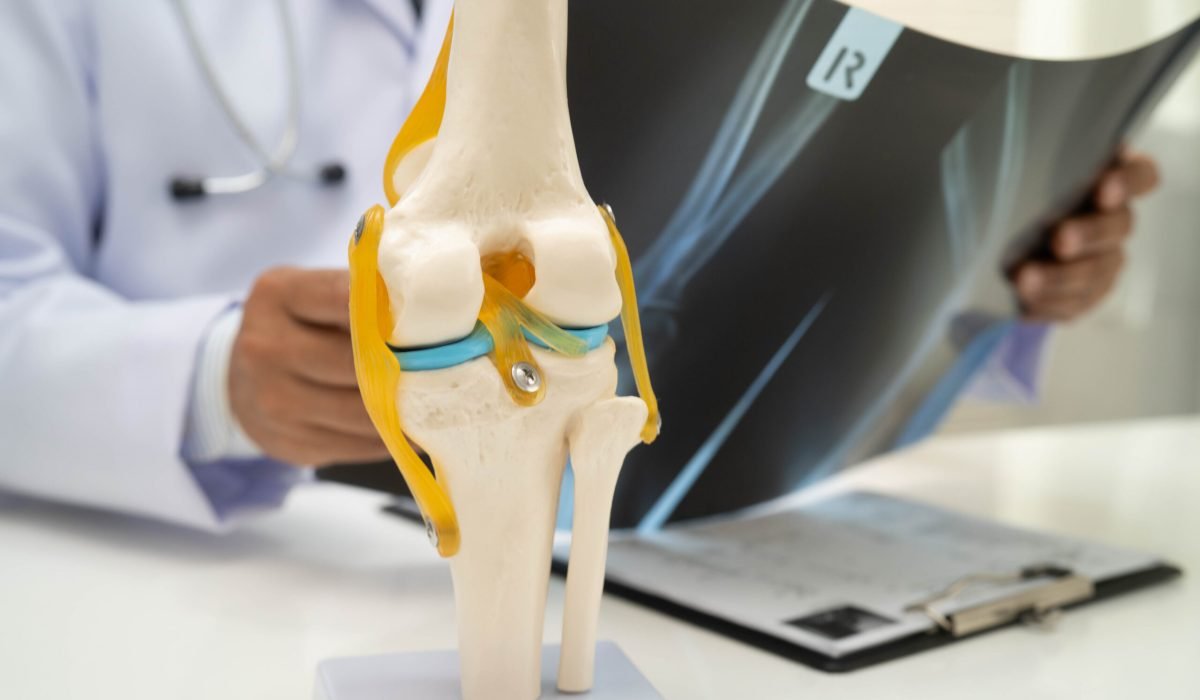
If a specialist’s letter has told you that you need a TKA, or your MRI report is full of terms like Kellgren-Lawrence grade and osteophytes, you are not alone in feeling lost. Knee replacement terminology mixes Latin anatomy, engineering language for the implant, and hospital shorthand, and almost none of it gets explained the first time you hear it. This guide translates every common knee replacement term into plain English, so you can read your own reports, compare knee replacement in Thailand against options in your home country fairly, and ask your surgeon sharper questions.
Quick answer
TKA stands for total knee arthroplasty, and TKR stands for total knee replacement. They are the same operation: replacing the damaged surfaces of the knee joint with an artificial implant. Surgeons in Thailand, the UK, the USA and Australia use both terms interchangeably.
Quick-Reference Table: Common Knee Replacement Abbreviations
Start here if you just want to decode your own paperwork. This table covers the abbreviations that appear most often on consent forms, clinic letters and discharge notes for a knee replacement.
| Term | What it means | Why it matters |
|---|---|---|
| TKA | Total Knee Arthroplasty (a full knee replacement) | The term used most often on consent forms and clinic letters. |
| TKR | Total Knee Replacement (identical to TKA) | Used more by UK and Australian clinicians; the same operation as TKA. |
| UKA / UKR / PKR | Unicompartmental Knee Arthroplasty / Replacement (Partial Knee Replacement) | Replaces only one damaged part of the knee, not the whole joint. |
| TKJR | Total Knee Joint Replacement | Another name for TKA/TKR seen on some Australian and NHS paperwork. |
| R TKA / L TKA / R TKR / L TKR | Right or Left Total Knee Arthroplasty (or Replacement) | Confirms which knee is being treated. |
| B TKA or B/L TKA (bilateral) | Bilateral Total Knee Arthroplasty | Both knees replaced, either in one operation or staged. |
| CR / PS | Cruciate-Retaining / Posterior-Stabilised | Describes the implant design used inside a TKA. |
| OA | Osteoarthritis | The wear-and-tear arthritis behind most knee replacements. |
| ROM | Range of Motion | How far you can bend and straighten the new joint. |
| WBAT / NWB | Weight-Bearing As Tolerated / Non-Weight-Bearing | Tells you how soon you can safely put weight on the leg. |
| DVT / PE | Deep Vein Thrombosis / Pulmonary Embolism | The blood clot risks every knee replacement patient is monitored for. |
| ERAS | Enhanced Recovery After Surgery | A structured pathway used to get patients moving and home sooner. |
TKA vs TKR: Is There Actually a Difference?
No. There is no clinical difference between a TKA and a TKR. Both describe the same procedure: removing the damaged surfaces of the femur, tibia and, usually, the kneecap, and replacing them with an artificial implant. The difference is entirely regional habit. “Arthroplasty” is the formal surgical term used in medical literature, operative notes and most international hospitals, including Thailand, so TKA tends to appear on clinical documentation. “Replacement” is the everyday term patients use, so TKR shows up more in UK and Australian patient-facing material. If a report uses one term and a quote or brochure uses the other, that alone is not a red flag; ask what implant design and fixation method are planned instead, since those details actually vary between surgeons and hospitals.
What Is the Medical Term for Knee Replacement? (Arthroplasty, Explained)
The formal medical term for knee replacement is arthroplasty, built from two Greek roots: arthro (joint) and plasty (to form or reshape). Literally, arthroplasty means reshaping a joint. Knee arthroplasty reshapes the knee joint; hip arthroplasty reshapes the hip. You will see this root throughout your paperwork: total knee arthroplasty (TKA), unicompartmental knee arthroplasty (UKA) and revision arthroplasty (a repeat operation) all use the same word for different scopes of the same underlying procedure.
The Anatomy of Your Knee: Basic Terms You Will Hear
Understanding basic knee anatomy helps you follow what a surgeon is actually treating and why one term rather than another appears on your notes.
Bones and Joint Surfaces
The distal femur is the lower end of your thigh bone. The proximal tibia is the top of your shin bone, which includes the tibial plateau. The patella is the medical term for your kneecap. The tibiofemoral joint is the main knee joint between the femur and tibia, and the patellofemoral joint is where the kneecap meets the femur, a common source of pain at the front of the knee.
Soft Tissues That Show Up on MRI Reports
Articular cartilage is the smooth covering on bone ends that allows low-friction movement. The medial and lateral meniscus are C-shaped shock absorbers between the femur and tibia; modern treatment favours meniscus preservation, meaning repair where possible rather than removal. The anterior cruciate ligament (ACL) and posterior cruciate ligament (PCL) control forward and backward movement, while the MCL and LCL stabilise the sides of the joint.
Alignment Terminology
Varus describes a bow-legged alignment that loads the inner (medial) compartment more heavily. Valgus describes a knock-kneed alignment, loading the outer (lateral) compartment. The mechanical axis is the straight-line alignment surgeons reference when planning a knee replacement, and malalignment can influence whether joint-preserving options or a full arthroplasty is offered.
Decoding Diagnostics and Imaging Reports (X-ray vs MRI vs CT)
Different scans look for different problems, which is where terminology confusion often starts when you are comparing hospitals internationally.
What Each Scan Is Looking For
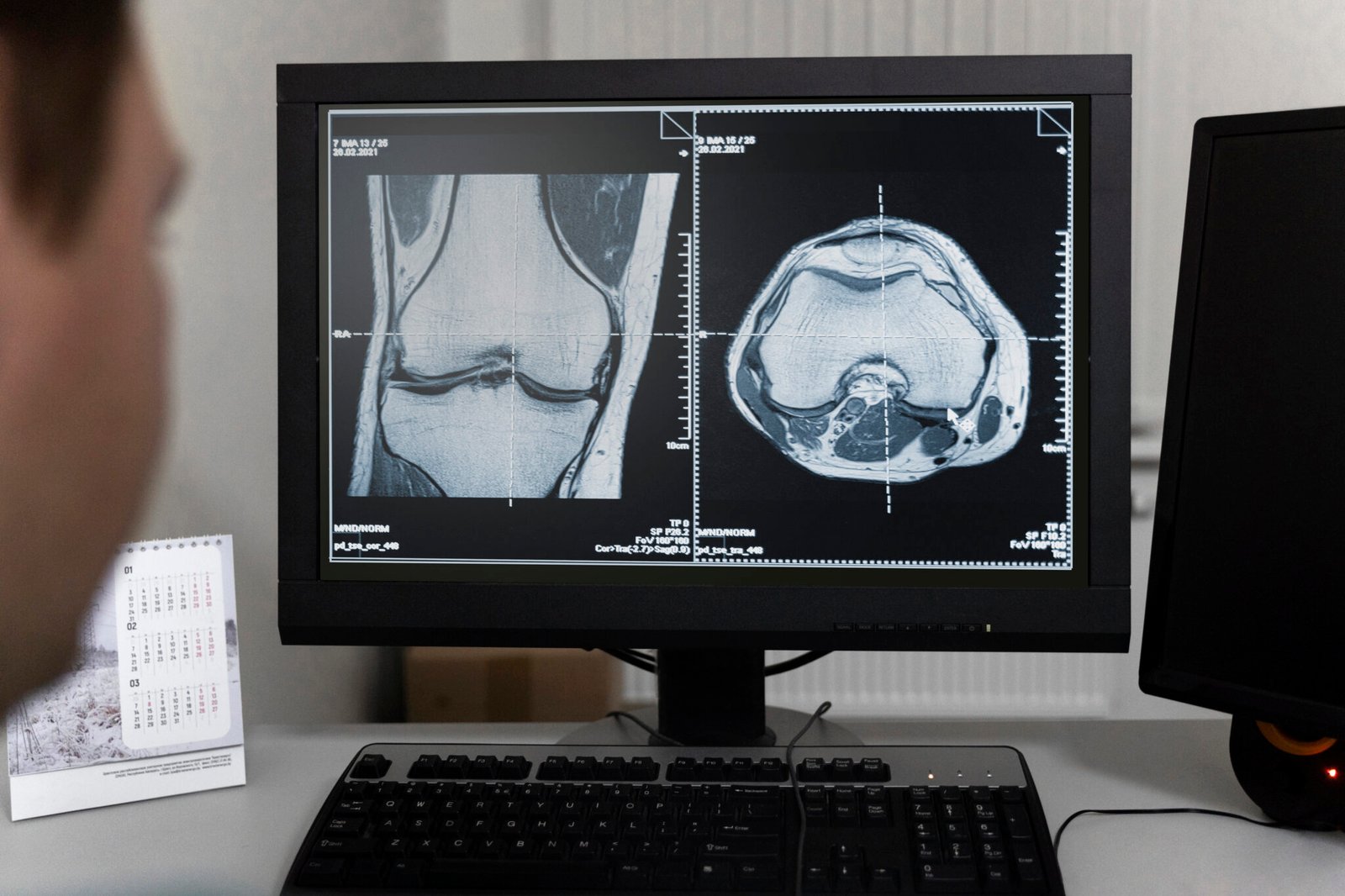
An X-ray (radiograph) evaluates arthritis changes such as joint space, bone spurs and deformity; standing X-rays are especially useful because they show how the joint behaves under body weight. MRI is needed to see soft tissues clearly, including cartilage defects, bone bruising and ligament tears. CT scans provide detailed bony anatomy and are sometimes used for pre-operative planning, including for some robotic knee replacement workflows.
Osteoarthritis Language
Joint space narrowing (JSN) suggests cartilage loss between the bones. Subchondral sclerosis or cysts indicate bone changes beneath worn cartilage. Doctors often use the Kellgren-Lawrence grade as a standard X-ray grading system for osteoarthritis severity. Imaging severity and how much pain you feel do not always match, which is one reason surgeons weigh your daily function as heavily as the scan.
Meniscus Tear Terminology
A radial tear runs across the meniscus and can affect how it transmits load. A bucket-handle tear is a displaced tear that can cause the knee to lock. A root tear happens at the meniscus’s attachment point and can behave as though the meniscus is missing altogether. Reports may also mention red-red or white-white zones, describing the meniscus’s blood supply; more blood supply generally means better healing potential.
Not sure what your own scan means?
Send your X-ray or MRI report to Medidash’s clinical coordination team for a free, no-obligation review before you decide on next steps. We will explain what it means in plain English and outline what a partner surgeon would likely recommend.
Minimally Invasive Procedures: Arthroscopy Terms You Should Recognise
Arthroscopy is commonly known as keyhole surgery: surgeons use a tiny camera and specialised instruments to treat problems without large incisions. The specific words used around this procedure tell you exactly what the surgeon intends to do.
Arthroscopy Terms
A diagnostic arthroscopy means the surgeon simply looks inside the joint to confirm findings. An arthroscopic partial meniscectomy (APM) trims or removes torn meniscus tissue. A meniscus repair uses sutures to stitch the meniscus back together to preserve it. Chondroplasty means smoothing unstable or frayed cartilage, and loose body removal is the process of removing floating bone or cartilage fragments that can cause the knee to catch or lock.
How to Interpret an Arthroscopy Plan
- Identify the target structure: is it the meniscus, cartilage, or a ligament?
- Clarify the goal: is the plan removal, or preservation and repair?
- Ask whether the problem is degenerative or traumatic; degenerative tears often respond to rehab-first approaches, while certain mechanical symptoms may need surgery.
- Establish the realistic outcome: pain relief is common, but arthroscopy does not cure arthritis.
Arthroplasty (Knee Replacement) Vocabulary You Must Understand
If you are weighing up options for treatment, including care abroad, understanding this vocabulary is essential for comparing quotes accurately.
TKA vs UKA (Total vs Partial)
TKA (Total Knee Arthroplasty) replaces the worn joint surfaces of the femur and tibia, and is recommended when arthritis affects multiple parts of the knee. UKA (Unicompartmental Knee Arthroplasty) replaces only one compartment, which can mean a more natural-feeling knee and a faster recovery, but it is not suitable for every arthritis pattern. For a full breakdown of who qualifies for each and how recovery compares, see our guide to deciding between a total and partial knee replacement.
Implant and Design Terminology
Cruciate-retaining (CR) implants keep your existing PCL ligament intact. Posterior-stabilised (PS) implants use specific geometry to substitute for that ligament’s function. You may also hear about fixed-bearing versus mobile-bearing designs, which describe how the plastic insert behaves; this comes up more often in discussions of partial knee replacement.
Fixation and Alignment Terms
Cemented fixation uses specialised bone cement to lock the implant in place. Cementless (press-fit) fixation relies on natural bone growing into the implant’s porous surface over time. You will also hear about mechanical alignment versus kinematic alignment, two different surgical philosophies for positioning components and restoring the overall straightness of the leg.
Robotic-Assisted Knee Replacement Terminology
Many international hospitals now offer robotic-assisted arthroplasty, sometimes under a specific brand name such as MAKO. These systems are typically paired with CT-based planning to support surgical accuracy and implant positioning. Our explainers on how MAKO robotic-assisted knee replacement works and robotic vs conventional knee replacement go into what the robot actually changes about the procedure, and the questions worth asking about planning accuracy, bone cuts and how a hospital tracks its long-term function scores.
Recovery, Rehab and Perioperative Terms
Your discharge paperwork uses terminology that directly affects your recovery timeline, which matters even more if you are flying home internationally after surgery. Our week-by-week knee replacement recovery timeline walks through what to expect at each stage; this section decodes the shorthand you will see written down.
Anaesthesia and Pain-Control Language
General anaesthesia means you are completely asleep during the operation. Spinal or neuraxial anaesthesia means you are numb from the waist down, often paired with light sedation. A peripheral nerve block provides targeted numbness in specific areas of the leg. Multimodal analgesia combines several types of medication to reduce pain, which helps limit the need for heavy opioid medication.
Blood Clot Prevention
DVT stands for deep vein thrombosis, a clot in a deep leg vein. PE stands for pulmonary embolism, a serious condition where a clot travels to the lungs. DVT/PE prophylaxis is your specific clot-prevention plan, typically combining medication, early movement and compression stockings. This vocabulary matters most if you plan to fly home soon after surgery; always confirm the exact prophylaxis medication and how long you need to continue it.
Mobility and Weight-Bearing Shorthand
WBAT means Weight-Bearing As Tolerated, letting you put as much weight on the leg as pain allows. NWB means Non-Weight-Bearing, meaning no weight goes on the operated leg at all. ROM (Range of Motion) measures how far you can successfully bend and straighten the recovering joint.
ERAS Protocols
ERAS (Enhanced Recovery After Surgery) is a structured pathway designed to reduce complications, improve pain control and mobilise patients earlier. Many leading international hospitals use ERAS protocols to support shorter hospital stays, which is beneficial for travelling patients, provided there is still a clear plan for follow-up care and physiotherapy once you are home.
Complications Vocabulary: Assessing Safety Without Panic
These are the exact words that appear on hospital consent forms and outcome discussions. Understanding them helps you evaluate safety rationally rather than anxiously.
Infection Terms
A superficial infection is generally minor and involves only the skin or surgical wound. PJI (Periprosthetic Joint Infection) is a deeper infection involving the implant itself. Serious infections after total knee replacement are statistically rare, but knowing the terminology helps you recognise what symptoms to monitor during recovery.
Clotting Terms
As above, DVT and PE refer to deep vein thrombosis and pulmonary embolism. Always ask your surgeon exactly what prophylaxis is recommended and for how long, particularly around a flight home.
Arthroplasty-Specific Risks
Aseptic loosening occurs when the implant loosens from the bone without infection present. Wear, or osteolysis, means particle wear has triggered bone loss around an implant over time. Arthrofibrosis is excessive scarring that causes stiffness in the joint. A revision TKA is a repeat surgery to replace or fix the original components.
How to Use This Vocabulary When Comparing Hospitals Abroad
If you are weighing up total knee replacement in Thailand against options at home, use these questions to compare hospitals on equal terms.
- Ask for the hospital’s specific tracked complication rates for infection, DVT and readmission.
- Ask what definitions they use; for example, what strictly counts as a deep infection versus a superficial one.
- Confirm the detailed aftercare plan, including wound checks and physiotherapy scheduling.
- Verify exactly what protocol applies if a complication appears after you have returned home.
Your Questions Checklist for a Knee Consultation
Knowledge protects both your health and your finances when comparing treatment options. Copy this checklist directly into your next consultation, wherever it takes place.
- Is my pain mainly from OA, a meniscus tear, ligament instability, or a combination?
- What does my Kellgren-Lawrence grade mean for my treatment options?
- If arthroscopy is recommended, what is the specific goal?
- Am I a candidate for UKA, or do I need a TKA?
- Would you use cemented or cementless fixation in my case?
- Is the proposed implant CR or PS, and what does that mean for stability?
- What is my expected weight-bearing status, and for how long?
- What is your DVT/PE prophylaxis plan, especially around any travel?
- What are your hospital’s rates for PJI, DVT/PE and readmission?
Book a Private Consultation with Medidash Global
Whatever terminology your own reports use, the questions that matter are the same: what exactly is being treated, which implant and technique are proposed, and how safely and transparently will it be delivered. Medidash Global coordinates knee replacement in Thailand with JCI-accredited partner hospitals,including Bumrungrad International Hospital and Phyathai 2 Hospital, board-certified orthopaedic surgeons and MAKO robotic-certified specialists where robotic-assisted surgery is appropriate for your case.
- A free review of your existing scans and specialist letters
- A remote consultation to talk through TKA, UKA and robotic-assisted options in plain English
- Transparent, itemised pricing with implant inclusion stated clearly before you commit
- End-to-end coordination, from your first video call through to physiotherapy after you fly home
Ready to talk it through?
Book a private, no-obligation consultation with a Medidash Global care coordinator and get clear answers about your knee replacement options in Thailand.
Frequently Asked Questions About Knee Surgery Terminology
What does TKA mean in knee surgery?
TKA stands for Total Knee Arthroplasty, also known as total knee replacement. It is usually recommended when arthritis affects multiple parts of the knee joint.
What does TKR stand for in medical terms?
TKR stands for total knee replacement, the same operation as total knee arthroplasty (TKA). It means replacing the damaged surfaces of the knee joint with an artificial implant.
What do R TKA and L TKA mean?
R TKA means right total knee arthroplasty and L TKA means left total knee arthroplasty. The letter tells the surgical team which knee is being replaced.
What is the medical term for a knee replacement?
The medical term is knee arthroplasty, and a full knee replacement is called total knee arthroplasty (TKA). Arthroplasty comes from Greek roots meaning to reshape a joint.
What does UKA mean in knee replacement?
UKA stands for Unicompartmental Knee Arthroplasty, also known as partial knee replacement. It replaces only one damaged compartment of the knee.
What does WBAT mean after knee surgery?
WBAT means Weight-Bearing As Tolerated. It means you can put weight on the operated leg as your comfort allows, based on your surgeon’s instructions.
What does DVT prophylaxis mean?
DVT prophylaxis means blood clot prevention. It may include medication, compression stockings, early walking and movement exercises.
Does arthroscopy cure knee arthritis?
No. Arthroscopy does not reverse osteoarthritis. It may help with select mechanical problems, but arthritis treatment depends on your symptoms, imaging and overall condition.
Helpful External Reading
If you want to continue your own research, these are reputable, independent starting points:
The American Academy of Orthopaedic Surgeons (AAOS) OrthoInfo provides patient guides on total knee replacement, written and reviewed by orthopaedic surgeons.
The UK National Health Service (NHS) offers a comprehensive, easy-to-read overview of knee replacement procedures and recovery timelines.