

If you’re counting down the days until you can grab your car keys again, you’re probably asking the same question most patients ask their surgeon: how long after knee replacement can I drive? For most people, the answer sits between 4 and 6 weeks after surgery, though it depends on which knee was replaced, what pain medication you’re still taking, and how your individual recovery is tracking. There is no single Australian law that sets this date for you. It comes down to medical clearance, physical readiness, and your insurer’s expectations.
Patients who choose knee replacement surgery in Thailand often ask this question even earlier, while they’re still planning their trip. Knowing roughly when you’ll be back behind the wheel at home in Australia helps you plan time off work, arrange transport for the first few weeks, and set realistic expectations with family who may need to drive you to physiotherapy in the meantime.
How Long After Knee Replacement Can You Drive? The Quick Answer
The honest answer to how long after knee replacement can I drive is that timing depends on three things: which knee was operated on, whether you drive an automatic or manual car, and whether you’ve come off prescription pain medication. Left knee replacement patients driving automatics are often cleared sooner. Right knee replacement patients need longer, because the right leg controls the accelerator and brake in almost every car on Australian roads. Whether you had a total or partial knee replacement also affects the timeline, since partial procedures are generally less invasive.
| Scenario | Typical Driving Timeline |
|---|---|
| Left knee replacement, automatic transmission, off pain medication | 2 to 3 weeks |
| Right knee replacement, any transmission | 4 to 6 weeks, sometimes up to 8 |
| Partial knee replacement | Often 1 to 2 weeks sooner than a total knee replacement |
| Bilateral knee replacement (both knees) | 6 to 8 weeks or longer |
A driving-simulator study of total knee replacement patients found that brake pedal force had not returned to pre-surgery levels until six weeks after the operation.
For patients having a bilateral knee replacement, both legs are recovering at once, so most surgeons recommend waiting at the longer end of the range, sometimes 8 weeks or more, before resuming driving.
Left Knee vs Right Knee: Why the Timeline Differs
In an automatic car, your left leg does very little of the work. It doesn’t operate the accelerator or the brake, so once you’re off strong pain medication and can comfortably get in and out of the car, a left knee replacement often allows an earlier return to driving, sometimes within 2 to 3 weeks. A right knee replacement is different. Your right leg is responsible for switching quickly between the accelerator and brake, especially in an emergency stop, so surgeons are typically more cautious, recommending 4 to 6 weeks and sometimes up to 8. If you drive a manual car, both legs are involved through the clutch, so recovery timelines for either knee tend to run longer regardless of which side was operated on.
What Clinical Research Says About Brake Reaction Time
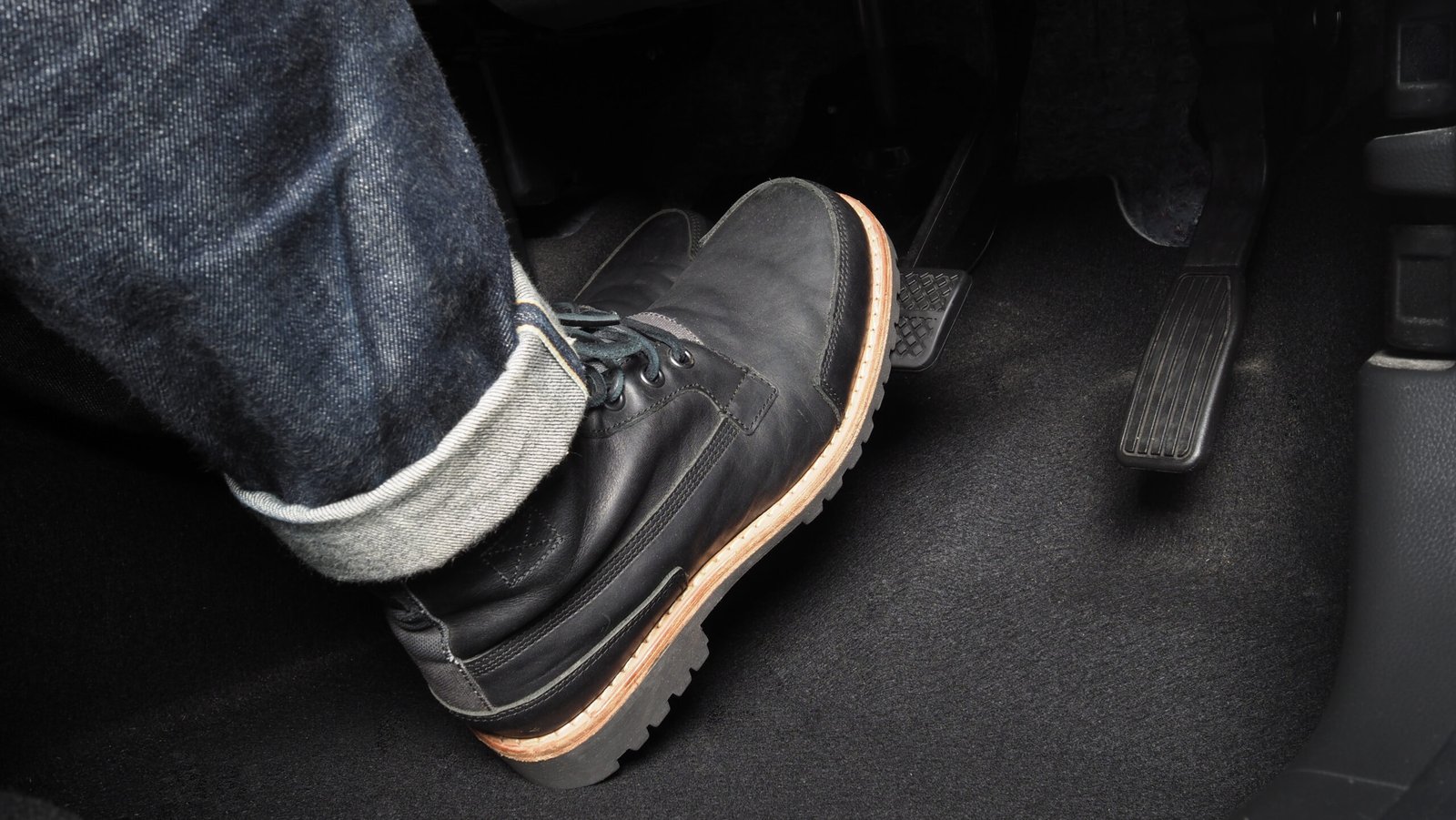
This isn’t just guesswork. A prospective study of total knee replacement patients, published in Knee Surgery, Sports Traumatology, Arthroscopy in 2021, measured brake pedal force and reaction time before surgery and again at 5 days, 3 to 4 weeks, and 6 weeks after surgery using a driving simulator. The study found that brake pedal force was the only parameter to show a significant decrease after surgery, and that preoperative baseline levels were only reached six weeks after the operation. Earlier research on right-sided knee replacements found similar results, with some studies recommending drivers wait up to 8 weeks. More recent research using contemporary surgical techniques found that patients returned to their baseline braking performance within 4 weeks after surgery, with no difference based on gender or age. The takeaway across the research is consistent: your surgeon’s individual assessment matters more than any single fixed number, but the 4 to 6 week window is well supported by evidence, not just convention.
Australian Driving Rules, Insurance, and Fitness to Drive After Surgery
There’s no specific Australian law that names knee replacement surgery and tells you exactly when you can drive again. Instead, drivers are covered by the national Assessing Fitness to Drive standards, jointly published by Austroads and the National Transport Commission, which place the responsibility on you as the driver to be medically fit at all times. Under these standards, transport authorities such as VicRoads and Transport for NSW can request medical evidence if there’s any doubt about your ability to control a vehicle safely.
Insurance is where most patients get caught out. If you’re involved in an accident while driving against your surgeon’s advice, before you’ve been cleared, or while still taking sedating pain medication, your insurer may decline the claim. Before you get back on the road, it’s worth calling your insurer to check their specific requirements and asking your surgeon for written clearance you can keep on file. This small step protects you, and everyone else on the road, while your new knee finishes healing.
Signs You’re Ready to Get Back Behind the Wheel
Beyond the general timelines, your surgeon and physiotherapist will look for specific signs of readiness before giving you the go-ahead. You’re generally on track when you can tick off:
- You’ve stopped taking opioid or sedating pain medication
- Your knee bends comfortably to at least 90 degrees
- Swelling has settled enough that it doesn’t restrict pedal movement, without any of the warning signs covered in our guide to swelling after knee replacement
- You can perform a firm, fast emergency stop without hesitation or pain
- You can get in and out of the car unassisted
- You’ve avoided the common mistakes to avoid after knee replacement surgery that can slow recovery
- Your surgeon has given written clearance to drive
Tips for Your First Drive After Knee Replacement
Once you’re cleared, ease back in rather than heading straight onto the motorway. A few practical steps make the transition safer:
- Practice first in a stationary car in your driveway or an empty car park, testing pedal control and emergency braking
- Adjust your seat and steering wheel position to keep your knee slightly bent and comfortable
- Start with short, familiar local trips before longer drives
- Never drive on a day you’ve taken opioid pain relief, even a low dose
- Keep a copy of your surgeon’s clearance note in the glovebox in case your insurer asks for it
Driving Again After Knee Replacement Surgery in Thailand
For patients recovering from knee replacement surgery abroad, the driving question usually comes with an extra layer: the flight home. Most patients want to know how long after knee replacement you can fly, since that affects how quickly they resume normal life back in Australia. The good news is that the two timelines run in parallel rather than adding together. Many patients recovering at some of the world’s best hospitals for knee and hip replacement are cleared to fly within one to two weeks with the right precautions, then continue the same 4 to 6 week driving recovery at home that any Australian patient would follow, regardless of where the surgery took place. Understanding the cost of knee replacement in Australia compared with treatment abroad is often what brings patients to Medidash Global in the first place, and the recovery milestones, including driving, are the same wherever the procedure happens.
Ready to Plan Your Knee Replacement Journey?

Every recovery is different, and the safest driving timeline for you depends on your own progress, not a generic number. If you’re weighing up options for knee replacement, including the choice between treatment in Australia and abroad, our team at Medidash Global can walk you through the full patient journey, from first consultation to the day you’re back behind the wheel. Contact us to start the conversation.
Frequently Asked Questions about Driving After Knee Replacement
How long after knee replacement can I drive an automatic car?
If you had a left knee replacement and you’re off pain medication, many patients return to driving an automatic within 2 to 3 weeks. For a right knee replacement, most surgeons recommend waiting 4 to 6 weeks regardless of transmission type, since the right leg operates both pedals.
Can I drive sooner after a partial knee replacement than a total knee replacement?
Often yes. Because a partial knee replacement is less invasive, some patients regain the strength and reaction time needed to drive slightly earlier than after a total knee replacement, though your surgeon will confirm this based on your recovery.
Will my car insurance cover me if I drive before I’m cleared?
Not necessarily. Australian insurers can decline a claim if you were driving against medical advice or while affected by sedating medication. Always confirm your surgeon’s clearance and check your policy’s wording before getting back on the road.
Is driving after knee replacement surgery abroad different to surgery at home?
No. Once you’re back in Australia, the same medical fitness principles apply, based on your individual recovery progress rather than where the surgery took place.
What if I need to drive for work sooner than 4 to 6 weeks?
Speak to your surgeon directly. Some patients with strong pre-surgery fitness and a straightforward recovery are cleared earlier, while others need longer. Never resume driving based on how you feel alone, without a professional assessment.
Related Reading for Your Knee Replacement Journey
- Comparing robotic vs conventional knee replacement before you decide on a technique
- How long a knee replacement implant typically lasts
- Our pre-surgery checklist and exercise guide to prepare before your operation
- A partial knee replacement recovery guide for patients weighing up their options
- Our knee surgery terminology guide for the terms your surgical team will use
- The complete guide to knee and hip replacement covering the whole patient journey