

You likely need a knee replacement if you have persistent, severe knee pain that does not settle with rest, medication, or physiotherapy, along with stiffness, swelling, or reduced mobility that stops you doing everyday activities. If an X-ray also shows significant cartilage loss or bone-on-bone contact, and conservative treatments have already been tried without lasting relief, an orthopaedic specialist is likely to say you are a candidate for surgery.
That said, the decision is never based on pain alone. Below, we break down the specific signs specialists look for, how the diagnosis is confirmed, and what your options are once you know surgery is genuinely on the table, including how patients from Australia are increasingly weighing up knee replacement surgery in Thailand against a long public waiting list at home.
The Key Signs You May Need a Knee Replacement
Doctors generally look for a combination of the following signs before recommending surgery. Having one of these on its own is common and usually not a reason to operate. Having several together, especially when they are getting worse, is what tips the decision toward surgery.
- Pain that doesn’t ease with rest: constant or severe pain in the knee, including pain that wakes you at night or lingers well after you’ve stopped moving.
- Stiffness and swelling: ongoing inflammation that limits how far you can bend or straighten the joint, even after a good night’s sleep.
- Reduced mobility: difficulty walking, climbing stairs, standing from a chair, or getting in and out of a car without support.
- Visible deformity: the knee looking bowed, swollen, or misaligned compared with the other side.
- Life planned around the pain: avoiding stairs, cutting outings short, or skipping activities like golf, gardening, or time with grandchildren because of your knee.
- Conservative treatment has stopped working: anti-inflammatories, physiotherapy, weight management, or steroid injections used to help, but no longer do.
How Orthopaedic Specialists Confirm You’re a Candidate
Your GP (General Practitioner) or an orthopaedic specialist won’t diagnose the need for surgery from symptoms alone. A physical examination checks your range of motion, joint stability, and any visible swelling or deformity. This is usually followed by imaging, most often an X-ray, to assess how much cartilage remains and whether the joint has narrowed to the point of bone-on-bone contact. An MRI may be used if soft tissue damage needs a closer look.
If you’re unfamiliar with terms like arthroplasty, prosthesis, or unicompartmental replacement, it’s worth reading our knee replacement terminology explained before your consultation, so you can follow the conversation with your surgeon more easily.
Surgery is generally only recommended once conservative options, rest, physiotherapy, weight loss where relevant, medication, and injections, have been tried and have failed to give lasting relief. A specialist will also weigh your age, activity level, and general health, since a knee replacement is a significant procedure with a recovery period attached.
Osteoarthritis: The Leading Cause Behind the Pain
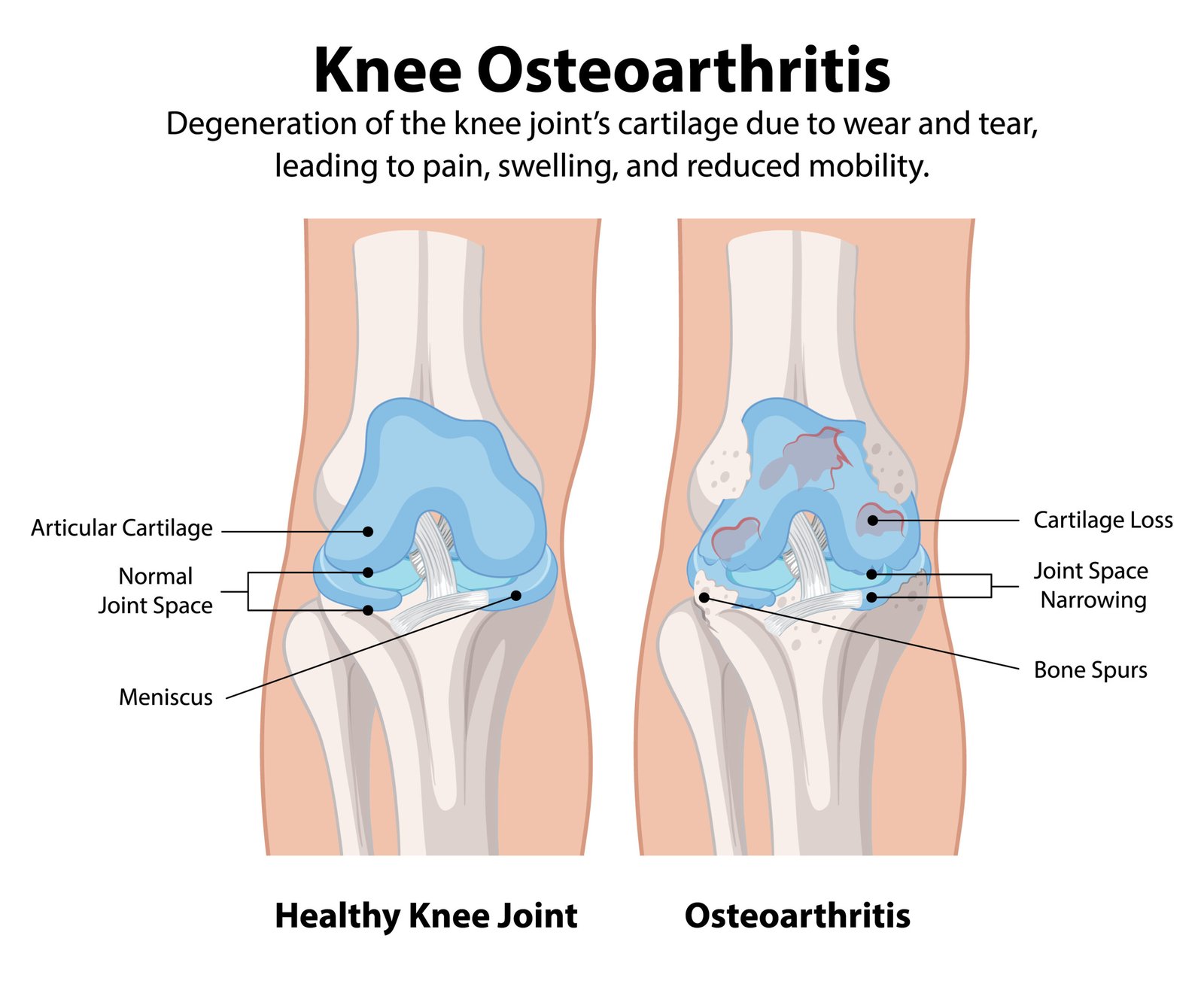
Most patients who end up needing a knee replacement have osteoarthritis, the wear-and-tear form of arthritis where the cartilage cushioning the joint gradually breaks down. According to the Australian Institute of Health and Welfare, around 2.1 million Australians, roughly 8.3% of the population, were living with osteoarthritis in 2022, and it remains the single most common reason for hip and knee replacement surgery in Australia.
Rheumatoid arthritis, an autoimmune condition, and post-traumatic arthritis following a previous knee injury are less common but still valid reasons a specialist may recommend replacement. In every case, the underlying question is the same: has the joint damage progressed to the point where a new joint offers more relief than any non-surgical option can.
The Reality of Waiting for Surgery in Australia
Once your specialist agrees you need a knee replacement, the next question is usually timing. In Australia’s public system, the wait can be long. AIHW figures for 2023-24 show the median wait for a public total knee replacement was 265 days, and around a quarter of patients waited more than a year for their surgery.
Private hospital cover shortens that considerably, but out-of-pocket gaps for the surgeon, anaesthetist, and hospital fees can still run into thousands of dollars, and standard waiting periods on hospital policies apply even to private patients.
This gap between diagnosis and treatment is exactly why a growing number of Australians look into treatment abroad. The real cost of knee replacement in Australia breaks down public, private, and overseas pricing side by side, so you can compare the full picture before deciding how to proceed.
Total or Partial: Which Replacement Might You Need
Not everyone who needs a knee replacement needs the whole joint replaced. If damage is confined to one compartment of the knee, a partial (unicompartmental) replacement may be an option, generally with a shorter recovery than a full replacement. Our guide on total versus partial knee replacement explains how surgeons decide which approach fits your specific joint damage.
Some patients also have significant arthritis in both knees at once. If that’s your situation, it’s worth reading having both knees replaced at the same time to understand the trade-offs between one combined recovery and two separate procedures.
Robotic or Conventional: Does the Technique Matter
Once surgery is confirmed, patients are often surprised to learn there’s more than one way to perform a knee replacement. Robotic-assisted systems use imaging and real-time guidance to help the surgeon align the implant with sub-millimetre precision, while conventional techniques rely on the surgeon’s manual instrumentation and experience. Neither is automatically right for every patient. Our comparison of robotic versus conventional knee replacement walks through what each approach involves and who tends to benefit most from robotic precision.
Preparing for Surgery, If You Decide to Go Ahead
Once you and your specialist agree a knee replacement is the right step, preparation makes a real difference to recovery. Pre-surgery strength and mobility exercises can shorten the time it takes to get back on your feet, and there are practical steps worth taking at home before you go under the knife. Our pre-surgery checklist and exercise guide covers exactly what to organise in the weeks beforehand.
What Recovery Looks Like After Surgery
Most patients are up and walking with support within a day of surgery, with physiotherapy starting almost immediately. Swelling is normal in the early weeks, but it’s worth knowing the difference between expected swelling and a warning sign worth calling your surgical team about. Our article on swelling after knee replacement explains what’s typical and what isn’t.
There are also a handful of common, avoidable slip-ups that can set recovery back. Before your surgery date, it’s worth reading mistakes to avoid after your operation so you go into rehabilitation prepared.
How Long a New Knee Replacement Actually Lasts

One of the most common questions from patients weighing up surgery is longevity. Modern knee implants are built to withstand decades of normal use, though the exact figure depends on the implant type, your activity level, and your surgeon’s technique. Our detailed breakdown of how long a knee replacement lasts covers realistic implant lifespans and what affects them.
If several of the signs above sound familiar, the next step is a proper clinical assessment rather than guesswork. Whether you end up on a public waiting list, book privately at home, or explore treatment overseas, understanding your options early gives you more control over how, and when, you get your mobility back.
If you’d like to talk through your specific situation, including realistic timelines and pricing, our team is happy to help. Get in touch with Medidash Global to start the conversation.
Frequently Asked Questions about Knee Replacement Surgery
How bad does knee pain need to be before I need a replacement?
There’s no single pain threshold. Specialists look at whether pain is constant, unresponsive to treatment, and limiting daily life, combined with imaging evidence of joint damage, rather than pain severity alone.
Can I avoid knee replacement with physiotherapy or injections?
For mild to moderate arthritis, yes, many patients manage symptoms for years with physiotherapy, weight management, and injections. Surgery becomes the recommended option once these measures stop giving lasting relief.
Is knee replacement surgery successful?
Outcomes are generally very good. Studies commonly report that up to 87 to 90 percent of patients report satisfaction and significant pain relief after surgery, particularly when expectations are realistic going in.
Why do Australians look at knee replacement in Thailand?
With the median public wait sitting at close to nine months, many Australians explore private surgery abroad to avoid a long wait, often at a lower total cost than private treatment at home. It’s the same reason the topic comes up early in most of our conversations with prospective patients from Australia.