

If you live in Australia and your specialist has just mentioned a total knee replacement, you have probably already heard the number. The median wait for a knee replacement in an Australian public hospital is 242 days, according to the latest data from the Australian Institute of Health and Welfare. Going private cuts that wait to weeks, but without insurance, a self-funded knee replacement in an Australian private hospital commonly costs somewhere between $19,000 and $42,000.
It’s no surprise that more Australians are looking at knee replacement in Thailand instead. But most of what turns up in a search is a generic “top 10 hospitals” list that reads the same for every country and every procedure. This guide is different. We looked closely at five hospitals that actually do a meaningful volume of knee replacement surgery in Bangkok: Bumrungrad International, Phyathai 2 International, KDMS, Vejthani, and Bangkok Hospital. We set out what genuinely differs between them, from accreditation to robotic technology to hospital size.
We’ll also walk through realistic cost comparisons, what to ask before you book, and how Medidash Global fits into the picture if you’d like support coordinating your care.
Why More Australians Are Looking at Thailand for Knee Replacement
Thailand has spent the past two decades building a private healthcare sector aimed squarely at international patients. Bangkok alone has a dense cluster of large private hospitals, several holding accreditation from Joint Commission International, or JCI, the same body that accredits leading hospitals in the United States and parts of Europe.
For Australians specifically, the appeal usually comes down to two things: time and cost.
“The median public hospital wait for a total knee replacement in Australia is 242 days for non-Indigenous patients, according to the Australian Institute of Health and Welfare.”
That wait applies to the public system. If you have private health insurance and it covers joint replacement, you can usually be treated within weeks rather than months, though you may still face a gap payment on top of your premiums. Without insurance, self-funding a knee replacement in an Australian private hospital is a serious expense, commonly landing somewhere between $19,000 and $42,000 depending on the surgeon, hospital and complexity of the case.
Thailand doesn’t remove every consideration from that equation. You still need to travel, arrange time off, and plan your recovery away from home. But for many patients, a coordinated trip to a JCI-accredited hospital in Bangkok, with a defined surgery date instead of an open-ended wait, is worth serious consideration. If you’re also weighing up Thailand against other countries, our broader look at the world’s best hospitals for knee and hip replacement takes a wider view. This guide stays focused on Thailand specifically.
What Actually Matters When Comparing Hospitals
Most articles on this topic just list hospital names. That’s not particularly useful if you don’t already know what separates one from another. Before we get into the five hospitals themselves, here’s what we think is genuinely worth paying attention to.
- Accreditation type. General JCI hospital accreditation is a good baseline, but some hospitals also hold a JCI Clinical Care Program Certification specifically for knee replacement, which is a more procedure-specific standard.
- Orthopaedic volume. A hospital that performs a genuinely high number of joint replacements each year, or has a dedicated orthopaedic centre, tends to have more refined post-operative protocols than one that treats knees as one of dozens of unrelated specialties.
- Robotic technology, if that matters to you. Not every patient needs or wants a robotic-assisted procedure, but if you do, it’s worth knowing which system a hospital actually uses, since MAKO, ROSA, VELYS and CORI are not interchangeable.
- Transparent, itemised pricing. A quote that clearly states whether the implant is included is far more useful than a round number with no breakdown.
- International patient support. Interpreters, visa assistance, and a dedicated coordinator matter more than they might seem to before you’re the one navigating a foreign hospital system.
5 Best Hospitals in Thailand for Knee Replacement 2026
With that in mind, here’s how five of Bangkok’s most established hospitals for knee replacement compare.
- Bumrungrad International Hospital
- Phyathai 2 International Hospital
- KDMS Specialized Orthopedic Hospital
- Vejthani Hospital
- Bangkok Hospital
1. Bumrungrad International Hospital
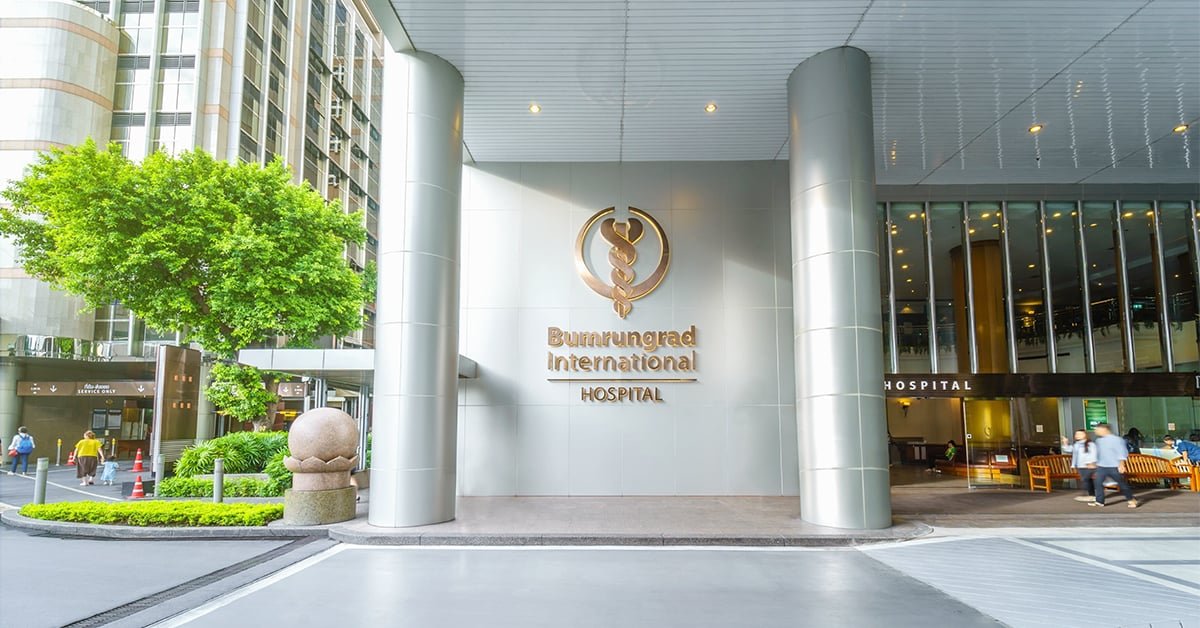
Bumrungrad was the first hospital in Thailand to receive JCI accreditation, back in 2002, and it remains one of the largest private hospitals in Asia, treating patients from more than 190 countries each year. Its Advanced Arthritis and Arthroplasty Centre has performed more than 2,000 joint replacements and offers MAKOplasty robotic-assisted knee replacement using the Stryker MAKO platform.
Because Bumrungrad is a large, full-service hospital rather than an orthopaedic specialist, it tends to suit patients who want easy access to other specialties on the same campus, useful if you have an unrelated health condition that needs monitoring alongside your knee surgery. It also runs a one-price policy, meaning the same rates apply to local and international patients.
2. Phyathai 2 International Hospital

Phyathai 2 has held JCI accreditation since 2014 and Thai national Hospital Accreditation since 1997, one of the longer continuous accreditation records among Bangkok’s private hospitals. It’s a 550-bed multispecialty hospital with a dedicated Orthopedic Institute, and its knee replacement program specifically holds a JCI Clinical Care Program Certification, a more procedure-specific standard than general hospital accreditation.
Phyathai 2 has also been recognised as Best Hospital in Thailand at the Global Health and Travel Awards. Its International Medical Center supports patients in a wide range of languages, and it tends to suit patients who want a full-service hospital with a formally certified, structured pathway for joint replacement specifically.
3. KDMS Specialized Orthopedic Hospital
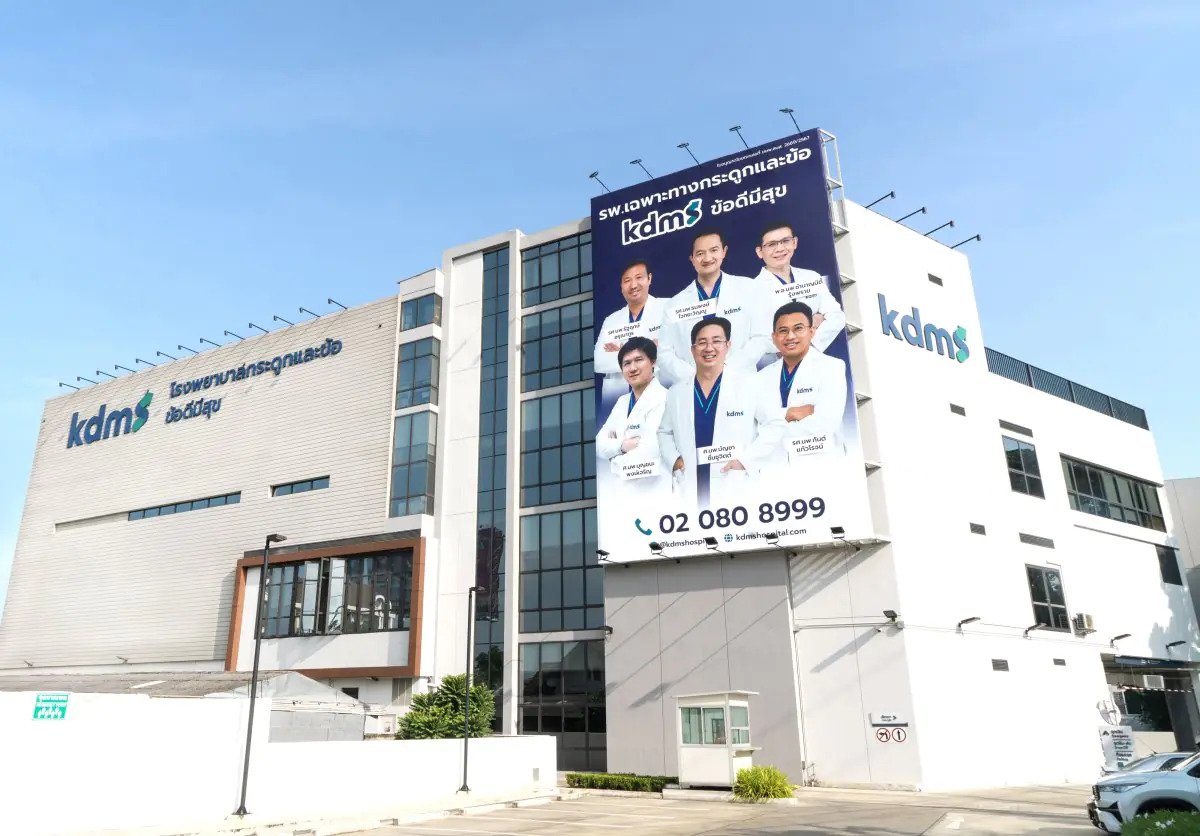
KDMS is Thailand’s first hospital dedicated exclusively to bone and joint conditions. It opened in 2022, holds accreditation from the American Accreditation Commission International, and is deliberately small, with around 21 inpatient rooms rather than hundreds of beds.
That boutique scale is the point. KDMS treats a smaller, more focused caseload of roughly 1,000 orthopaedic patients a year, with a team of around 50 specialists across six subspecialties including knee and hip. It offers robotic-assisted knee replacement and suits patients who would rather be treated at a hospital built entirely around bone and joint care than a large general hospital where orthopaedics is one department among many.
4. Vejthani Hospital

Vejthani has earned the nickname ‘the King of Bones’ from patients, and the numbers back it up. It’s held JCI accreditation continuously since 2010, most recently renewed through 2028, and has performed more than 10,000 joint replacement surgeries. Its knee replacement program holds a dedicated JCI Clinical Care Program Certification.
Vejthani also offers the widest choice of robotic-assisted systems on this list, MAKO, ROSA, VELYS and CORI, across its 263-bed hospital. In 2024, Newsweek named it Best Specialized Hospital in Asia Pacific for Orthopedics. If your priority is choosing a hospital with the deepest orthopaedic case volume and the most robotic platform options, Vejthani is worth strong consideration.
5. Bangkok Hospital
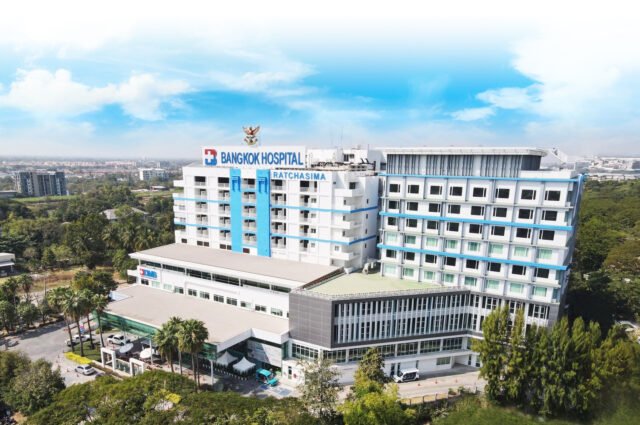
Bangkok Hospital is the flagship of Bangkok Dusit Medical Services, Thailand’s largest private hospital network. Founded in 1972, it holds JCI accreditation across seven consecutive certification cycles and, notably, a Clinical Care Program Certification specifically for geriatric orthopaedics, relevant given many knee replacement patients are older.
With 488 beds, more than 1,200 physicians, and over 30 specialised departments on one campus, Bangkok Hospital suits patients who want the reassurance of a very large hospital with virtually every other specialty available on site, in case anything unrelated needs attention during your stay.
Here’s how all five compare side by side:
| Hospital | JCI Accreditation | Scale | Orthopaedic Distinction | Robotic Systems |
| Bumrungrad International | Since 2002 | Large, full multispecialty | 2,000+ joint replacements; Advanced Arthritis & Arthroplasty Centre | MAKO |
| Phyathai 2 International | Since 2014 | 550 beds, full multispecialty | JCI-certified knee replacement program | Robotic-assisted options available |
| KDMS Specialized Orthopedic | AACI accredited | Boutique, ~21 rooms | Orthopaedics-only hospital, ~1,000 patients/year | MAKO |
| Vejthani | Since 2010 (through 2028) | 263 beds | 10,000+ joint replacements; JCI-certified knee program | MAKO, ROSA, VELYS, CORI |
| Bangkok Hospital | 7 consecutive cycles | 488 beds, BDMS flagship | JCI-certified geriatric orthopaedics program | Robotic-assisted options available |
Is Robotic Knee Replacement Available at These Hospitals?
Yes, in some form, at all five. Robotic-assisted knee replacement uses a CT scan and 3D planning software to guide the surgeon’s instruments with more precision than a fully manual technique, and several studies suggest it can improve implant alignment. Vejthani has the widest range of systems, offering MAKO, ROSA, VELYS and CORI, while Bumrungrad and KDMS both use the Stryker MAKO platform. Bangkok Hospital and Phyathai 2 also offer robotic-assisted options.
Robotic assistance isn’t automatically the right choice for every patient. A well-performed conventional knee replacement remains highly effective, and it’s worth discussing with your surgeon which approach suits your specific knee. For a deeper look at how the technology works, see our guide to MAKO robotic surgery.
Knee Replacement Cost, Thailand Compared with Australia
It’s tempting to want a single dollar figure for Thailand and a single dollar figure for Australia. In practice, both vary too much for that to be honest. What we can do is lay out the pathways clearly.
| Pathway | Typical Wait | What It Costs |
| Australia, public (Medicare) | 242 days median nationally (longer in some states) | No direct cost to you for the surgery itself |
| Australia, private with insurance | Usually weeks | A gap payment, commonly a few hundred to a few thousand dollars, on top of premiums |
| Australia, private, self-funded | Usually weeks | Commonly $19,000 to $42,000 or more, depending on surgeon, hospital and complexity |
| Thailand, coordinated internationally | Often weeks from initial enquiry | Ask for a written, itemised quote before comparing it to anything above |
That last row is deliberately short on numbers. Package pricing for knee replacement in Thailand varies by hospital, surgeon, and whether you choose a robotic-assisted procedure, and a headline figure that doesn’t clearly state whether the implant, hospital stay, and follow-up physiotherapy are included isn’t a figure worth comparing against anything. If you want to see how this plays out specifically for Australian patients, our guide on the cost of knee replacement in Australia goes into more detail on the public and private pathways.
When you do get a quote from Thailand, ask directly whether the implant brand and cost are included, how many nights in hospital are covered, and what happens if your recovery needs an extra day or two. A hospital that answers those questions clearly and in writing is a good sign in itself.
Questions to Ask Before You Book
- Is the implant included in the quoted price, or itemised separately?
- Does the hospital hold accreditation specific to joint replacement, or only general hospital accreditation?
- How many knee replacements does this hospital, and ideally this surgeon, perform each year?
- If robotic assistance matters to you, which system is used, and is there an extra fee?
- What’s included in aftercare: how many physiotherapy sessions, and how many nights in hospital?
- Who coordinates your visa, transport and accommodation, and what support is available if you have concerns after you’re home?
How to Narrow Down Your Choice
- Decide whether you’d rather be treated at a large, full-service hospital such as Bumrungrad or Bangkok Hospital, or an orthopaedics-only specialist such as KDMS or Vejthani.
- Work out whether robotic-assisted surgery is something you specifically want, and if so, which platform.
- Ask each hospital for orthopaedic-specific volume and outcome information, not just general hospital statistics.
- Get a written, itemised quote before committing to travel dates.
- Confirm what happens if you need extra recovery time in Thailand before you’re cleared to fly home.
How Medidash Global Can Help You With Knee Replacement Procedure in Thailand
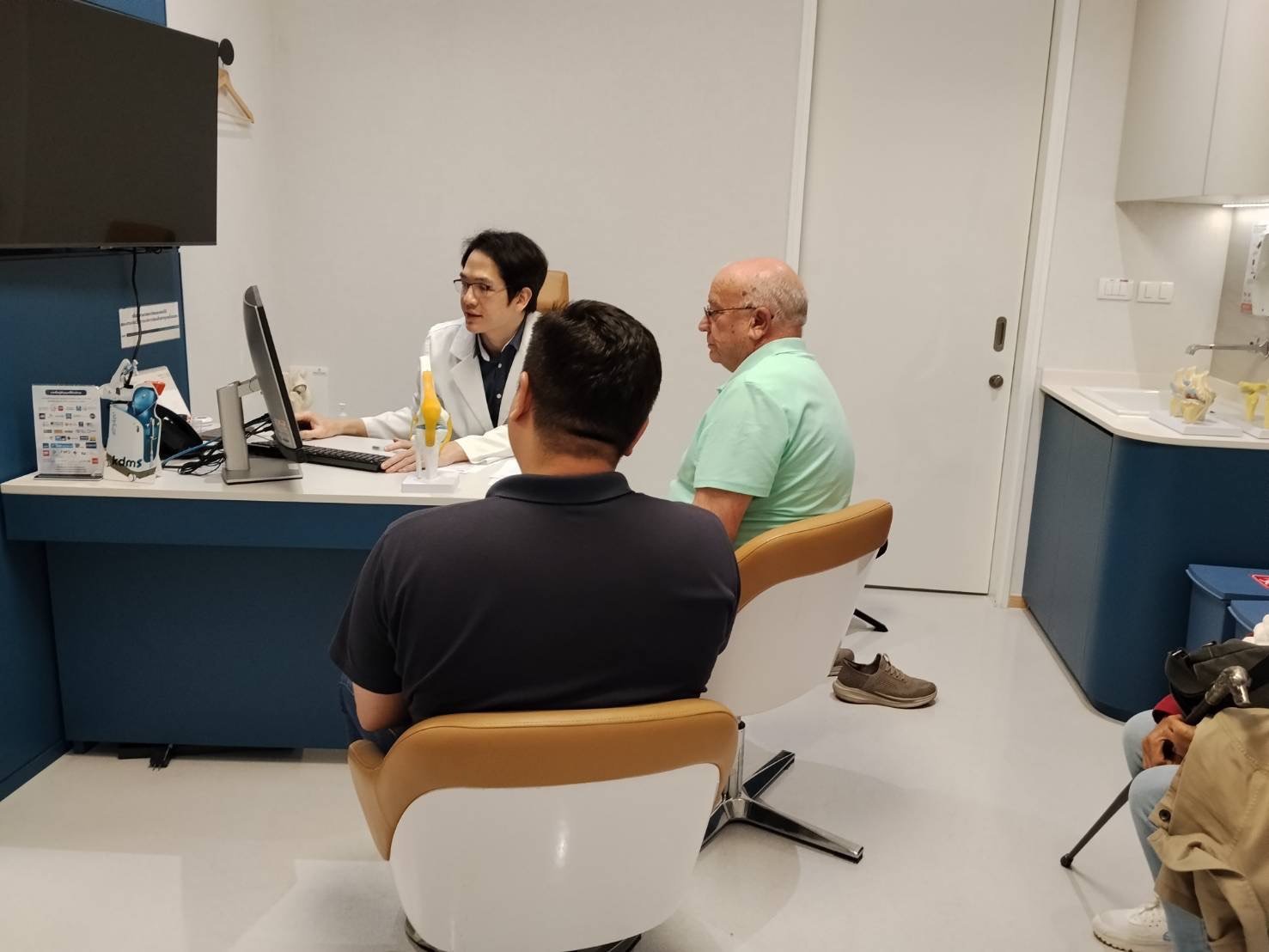
Medidash Global currently coordinates knee replacement care at Bumrungrad International, Phyathai 2 International, and KDMS, handling everything from your initial enquiry through to post-operative follow-up. We’ve included Vejthani and Bangkok Hospital in this guide because they are genuinely strong options in Bangkok’s orthopaedic landscape, and if either is the better fit for your specific case, our team can talk you through your options.
Every hospital we work with is selected against a set of quality criteria, which you can read more about on our partner hospitals page. We’ll always give you a straight answer about what’s included in any quote, implant, hospital stay, and aftercare, before you commit to anything. If you’d like to talk through which hospital and approach makes sense for your knee, get in touch and we’ll walk you through it.
Frequently Asked Questions About Knee Replacement in Thailand
Which hospital in Thailand is best for knee replacement?
It depends on what matters most to you. Vejthani has the highest joint replacement volume and the widest choice of robotic systems. Bumrungrad and Bangkok Hospital suit patients who want a large hospital with other specialties on site. KDMS suits patients who prefer a small, orthopaedics-only environment. Phyathai 2 offers a formally certified knee replacement program within a full-service hospital.
Is Vejthani or Bumrungrad better for knee replacement?
Both are strong, well-accredited choices. Vejthani has performed more joint replacements overall and offers more robotic system options, while Bumrungrad is a larger, more broadly specialised hospital. Neither is objectively “better”, the right choice depends on your priorities and your specific case.
Do hospitals in Thailand offer MAKO robotic knee replacement?
Yes. Bumrungrad and KDMS both use the Stryker MAKO platform, and Vejthani offers MAKO alongside three other robotic systems. Not every patient needs a robotic-assisted procedure, so it’s worth discussing the options with your surgeon.
How much faster is knee replacement in Thailand compared to the public wait in Australia?
The median public hospital wait for a total knee replacement in Australia is 242 days, according to AIHW data. A coordinated trip to Thailand is often measured in weeks from initial enquiry, though your own timeline will depend on pre-operative tests and your specific case.