

If you have been told you need a knee replacement, the question on your mind is probably a simple one: how long can you wait? The honest answer depends on which system you are waiting in. Australia’s public hospitals currently ask most patients to wait many months, sometimes more than a year, while private surgery can happen in weeks rather than months if you are willing to pay for it or travel for it. This guide walks through the real wait times, what doctors say about waiting too long, and what a faster, JCI-accredited knee replacement in Thailand actually looks like, from cost to recovery.
Quick answer
Public hospital patients wait a median of 265 days for a total knee replacement (AIHW, 2023-24), and almost one in four wait more than 12 months. Private surgery in Australia typically happens within 4 to 6 weeks once any insurance waiting period is served. Treatment in Thailand is usually arranged within 2 to 4 weeks of your first consultation.
How Long Is the Public Waiting List for a Knee Replacement in Australia?
In the public hospital system, a knee replacement is treated as elective surgery, which means it is scheduled rather than urgent. Once your orthopaedic surgeon refers you, you are placed on a waiting list and given a clinical urgency category.
According to data from the Australian Institute of Health and Welfare (AIHW), half of all patients on the public waiting list for a total knee replacement in 2023-24 were admitted within 265 days, and roughly one in four waited longer than 12 months. AIHW’s most recent national release covers 2024-25, but publishes a knee-specific median only through its interactive dashboard rather than a fixed published figure, so check AIHW’s waiting times by intended procedure directly for the very latest number.
| Urgency category | Clinical target | What it means |
|---|---|---|
| Category 1 (Urgent) | Within 30 days | Your condition could deteriorate quickly if surgery is delayed |
| Category 2 (Semi-urgent) | Within 90 days | Some pain and deterioration is expected, but it is not an emergency |
| Category 3 (Non-urgent) | Within 365 days | Minimal risk of rapid deterioration; most standard knee replacements fall here |
Most standard knee replacements are placed in Category 3, which is exactly why the median wait stretches past eight months in many states. Wait times also vary widely by state, region and hospital, so two patients with the same diagnosis can wait very different lengths of time depending on where they live.
For the fuller picture on recovery, cost and what to expect either way, see our complete guide to knee and hip replacement.
The Hidden Wait: Getting to a Specialist Before You’re Even on the List
The headline wait-list figures above only start counting once you and an orthopaedic surgeon have agreed to proceed with surgery. For many patients, the longer wait happens earlier: simply getting a public specialist appointment to be assessed in the first place. A 2022 Australian study on orthopaedic consultation wait times found that in Victoria, the median wait just to see an orthopaedic surgeon in the public system, before any surgery waiting list even begins, was 769 days. New South Wales and the ACT don’t publicly report this figure at all, which makes it hard for patients in those states to know what they’re really facing.
In practice, this means the true time from first noticing a problem to walking out of surgery can be considerably longer than the official 265-day median suggests, once the specialist-referral wait is added on top.
How Wait Times Vary by State
AIHW doesn’t publish a knee-specific breakdown by state in a simple table; that level of detail requires its interactive dashboard. What it does publish for 2024-25 is a state-by-state view across all elective surgery categories, showing how many patients were treated within their clinical target and, for those who weren’t, how far overdue they were on average. It’s a useful proxy for how stretched each state’s public system is generally, even though it isn’t knee-specific:
| State / territory | Treated within clinical target (2024-25) | Average overdue wait (days) |
|---|---|---|
| New South Wales | 83% | 60 |
| Victoria | 84% | 236 |
| Queensland | 81% | 105 |
| Western Australia | 80% | 114 |
| South Australia | 72% | 131 |
| Tasmania | 65% | 162 |
| Australian Capital Territory | 67% | 164 |
| Northern Territory | 68% | 469 |
Source: AIHW, Waiting times overview, all elective surgery categories, 2024-25.
How Long Is It Actually Safe to Wait Before Getting a Knee Replacement?
Clinical urgency categories describe how the health system prioritises you, but that is not quite the same question as how long is medically safe. This isn’t specific to Australia’s public system, but it’s relevant to anyone weighing whether to keep waiting: a widely reported US study led by researchers at Northwestern Medicine, published in the Journal of Bone and Joint Surgery, followed more than 8,000 patients with knee osteoarthritis for up to eight years.
The study found that roughly 90 percent of people who would benefit from a knee replacement wait longer than they should, often losing function they don’t get back, while around 25 percent have the operation too soon with little added benefit, according to the Northwestern Medicine research summary.
Waiting is not free of consequences. The longer arthritis progresses, the more the joint can shift out of alignment, the muscles around the knee weaken from disuse, and overall fitness and mobility decline, all of which make the surgery itself more complex and can affect how well you recover afterward.
What Happens If You Wait Too Long for Surgery?
Delaying a knee replacement you already need does not just mean more time in pain. It tends to compound in a few predictable ways:
- Increased pain and reliance on medication, with less benefit from each dose over time
- Muscle wasting and reduced mobility, which makes rehabilitation slower after surgery
- A knee that has drifted further out of alignment, which can make the operation itself more technically difficult
- Flow-on strain to the hip, the other knee and the lower back from compensating for pain
- Lower overall satisfaction with the surgical outcome compared with patients who did not wait as long
- Knock-on effects on mental health, sleep and independence from months of reduced activity

Public vs Private vs Overseas: Comparing Your Options for a Faster Knee Replacement
Once you understand the wait, the real question becomes what your options actually are. Broadly, Australians facing a knee replacement are choosing between three routes.
| Route | Typical wait | What to know |
|---|---|---|
| Public hospital (Medicare) | Roughly 8 months, often over a year | Least control over timing and choice of surgeon |
| Private hospital in Australia | 4 to 6 weeks once insurance waiting periods are served | Usually requires up to 12 months of prior hospital cover with joint replacement included |
| Knee replacement in Thailand (Medidash Global) | 2 to 4 weeks from consultation to surgery | JCI-accredited hospitals with full patient support |
Public surgery has no direct cost, whereas private and overseas care are priced separately, and our guide to knee replacement cost in Australia breaks down each route. Even with private hospital cover, most policies only cover joint replacement after a waiting period of up to 12 months. That rarely helps if you need surgery this year and only just took out cover, which is where overseas surgery closes the gap. For the full detail on what Medicare does and doesn’t pay for, see does Medicare cover knee replacement in Australia.
If you want a clear picture of your own timeline, you can arrange a free case review with the Medidash Global team and get a straight answer on cost, scheduling and eligibility.
Why Australians Are Choosing Bangkok for a Faster Knee Replacement
Medidash Global works with two JCI-accredited partner hospitals in Bangkok. Phyathai 2 International Hospital offers standard total knee replacement from AU$13,000, while KDMS Hospital, Thailand’s first hospital dedicated solely to bone and joint care, offers MAKO robotic-assisted knee replacement from AU$20,000. Both use the internationally recognised implant systems and surgical standards you would expect at home, with the added benefit of surgery scheduled in weeks rather than months.
For patients who want more precision in implant alignment, robotic-assisted surgery uses a 3D model of your own knee to plan the bone cuts and implant placement before the surgeon operates, which can mean a smaller incision and a more personalised fit. If you are weighing up hospitals more broadly, it is also worth reading why one of the world’s best joint replacement hospitals might not be where you think.
What to Expect When You Book Your Knee Replacement in Bangkok
- Initial enquiry and records review: you send your scans, X-rays and surgeon’s notes for a clinical review before you commit to anything
- Quote and scheduling: Medidash Global confirms hospital, surgeon availability and an all-in quote, generally within 2 to 4 weeks of your first enquiry
- Travel and pre-admission: flights, accommodation and hospital pre-admission tests are arranged before you arrive in Bangkok
- Surgery and hospital stay: most patients remain in hospital for several days immediately after a total knee replacement
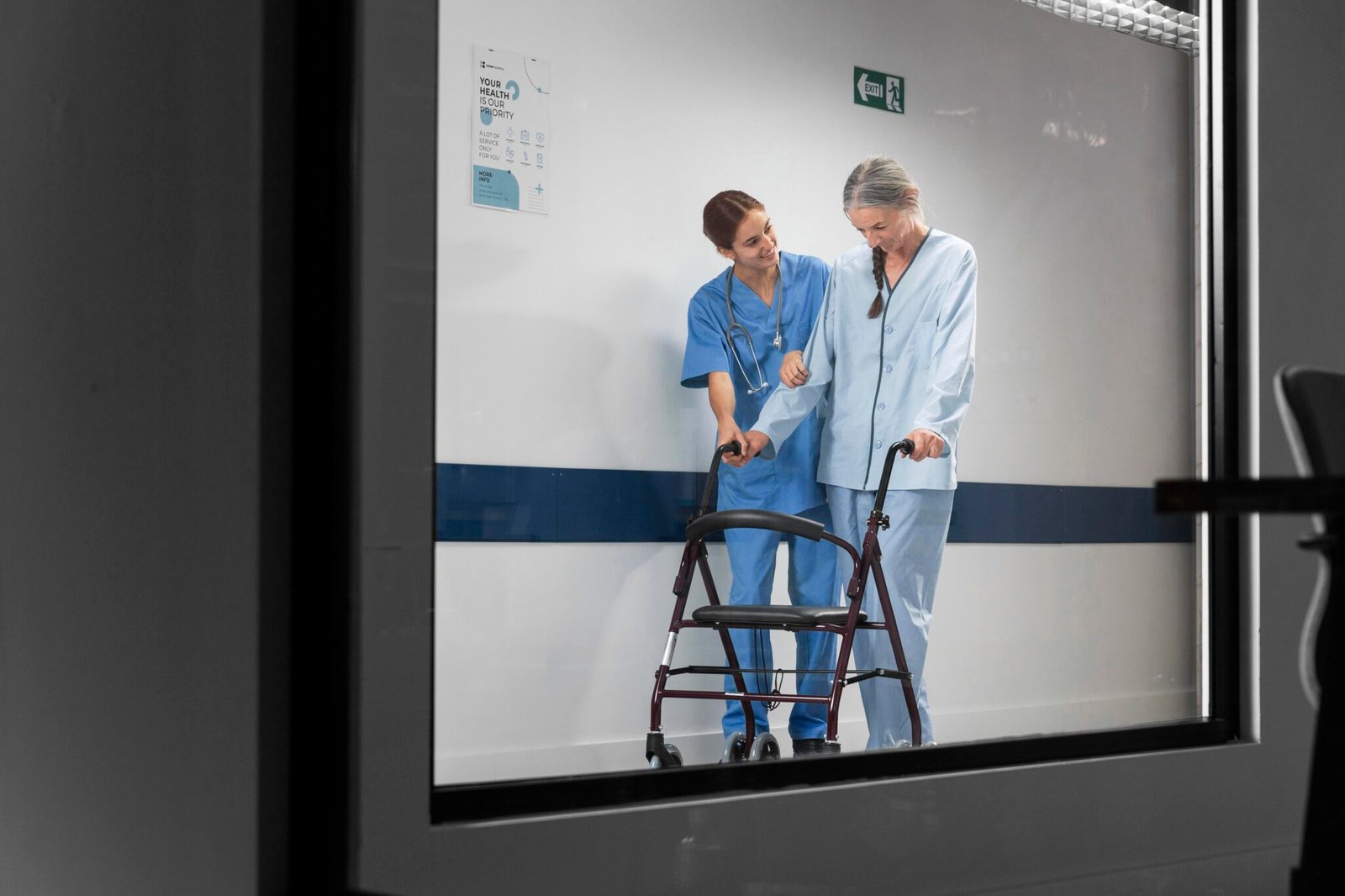
- Recovery in Bangkok: physiotherapy begins early, and most patients stay in Thailand for one to two weeks of supervised recovery before flying home; see our guide to flying after knee replacement for the details
- Ongoing follow-up: Medidash Global coordinates follow-up check-ins with your surgical team once you are back home in Australia
Book a Private Consultation with Medidash Global
If you are tired of waiting and want to know exactly how soon you could have your knee replacement done, whether that means understanding your public category, weighing up private cover, or finding out what a Bangkok timeline would actually look like, Medidash Global’s care coordinators can walk you through it.
- A free, no-obligation review of your case, scans and current wait status
- A straight answer on realistic scheduling at Phyathai 2 International Hospital or KDMS Hospital
- Clarity on standard vs MAKO robotic pricing, with implant inclusion stated up front
- Coordination of the entire trip, from surgeon matching through to your recovery and flight home
Ready to stop waiting and see your options?
Book a private, no-obligation consultation with a Medidash Global care coordinator and find out exactly how soon your knee replacement could happen.
Frequently Asked Questions About Knee Replacement Waiting Times in Australia
How long is the public hospital wait for a knee replacement in Australia?
Around eight months on average (a median of 265 days as of 2023-24 AIHW data), though patients in some states and regional areas wait considerably longer, and almost a quarter of patients wait more than 12 months.
Can I skip the public hospital waiting list?
Not for public surgery, but you can move into the private system if you have appropriate hospital cover and have served any waiting periods, or look at options overseas such as a knee replacement in Thailand, where surgery is often scheduled within 2 to 4 weeks.
Is it dangerous to wait too long for a knee replacement?
Waiting itself is not dangerous the way an untreated infection would be, but research shows that patients who wait past the point of being a good surgical candidate tend to have more muscle loss, a harder recovery and lower satisfaction with the result.
Does private health insurance guarantee a fast knee replacement?
No. Even with hospital cover that includes joint replacement, most policies require up to a 12-month waiting period before you can claim, so insurance alone does not solve a wait that starts this year.
How much does a knee replacement cost in Thailand compared with Australia?
A self-funded knee replacement in Australia is estimated at around $23,200 including specialist and hospital fees. Standard knee replacement at Medidash Global’s partner hospital in Bangkok starts from AU$13,000, with MAKO robotic surgery from AU$20,000. Always confirm current pricing and whether the implant is included before booking.
Are hospitals in Thailand safe for knee replacements?
Medidash Global’s partner hospitals, Phyathai 2 International Hospital and KDMS Hospital, are JCI-accredited, the same international standard used by leading hospitals worldwide, and the process covers the full patient journey from initial consultation through recovery and follow-up.